Showing posts with label Definitions. Show all posts

Sunday, December 13, 2015

The Marriage Formula (Pt. 1)

Oh my gosh guys, its been ages! I looked at my last uploaded post and it's dated February 2015!  O_o

A couple of weeks ago I saw a TED Talk on my twitter timeline (Twitter: @notrude_honest) and I proceeded to watch it. I love TED Talks but I'm not very good at keeping up with things online so I'm heavily reliant on recommendations from friends/colleagues in order to find ones that interest me.

So anyway, I watched this TED Talk by relationship therapist Esther Perel and was instantly reminded of a conversation I'd had regarding marriage. 


We were debating the components that went into a successful marriage and the two most important ones were love and partnership (Please read my disclaimer before you argue this point. Thank you.). To a lot of people the two may be synonymous but we agreed that they weren't; what we didn't agree on was my 'Marriage Formula':

  • Great Partnership + No love = Long marriage (good marriage?)
  • Bad Partnership + Love = High probability of divorce (bad marriage?)
  • Great Partnership + Love = Great marriage

Please note: For the purpose of this post 'love' will refer to the fairytale variety, the "passionate/butterflies in your stomach/can't breathe without you/you complete me/catch a grenade for you" kind of love.


I know that this formula may be widely unpopular but consider what marriage is and why it was created. Before marriage included white dresses, pre-nups and social media hashtags, marriage was simply about survival. You did not choose a mate based on love, you chose a mate based on capabilities; is he skilled enough to go kill an antelope? If I bring the antelope home can she cook it? Are her hips wide enough for safe childbearing? Is he strong enough to build our house and protect our family?  Is he/she healthy? These were reasons to choose a mate and the basis of attraction.


As society developed and customs were formed, coupling became a cause for celebration hence the modern day weddings, and when there was a need for identity and classification, various versions of the modern day marriage certificate were created.

There is still no mention of love. Why? Because marrying for love wasn't practical. Love was something that would develop after the union and even if it didn't, the lineage would continue and humans wouldn't become extinct. There are still many cultures that participate in the process of arranged marriage and some of the world's most popular love stories are based on the effect falling in love with someone 'impractical' has on arranged marriages.
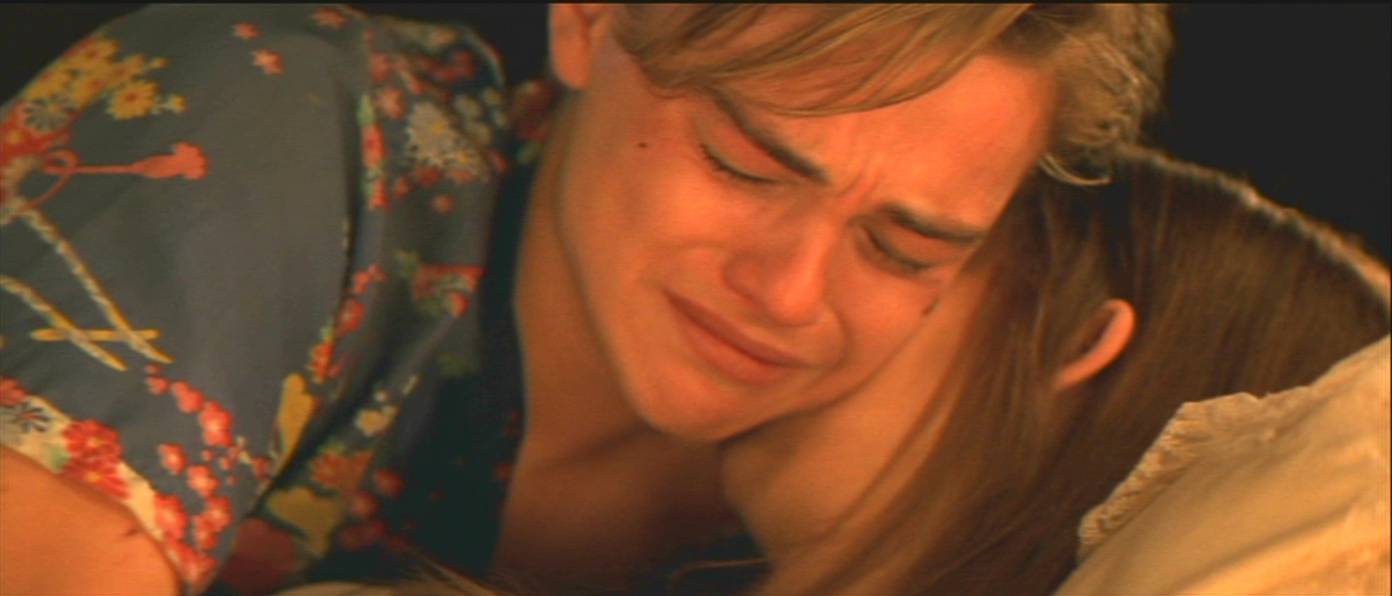
The tragic love story of Romeo & Juliet
So now that we've got that mini history lesson out of the way, let's review my 'Marriage Formula':

Great Partnership + No love = Long marriage: Even if there is no love (please refer to definition above) the basic uses of mating can be fulfilled - survival and procreation - and therefore, if there is great partnership, a marriage, like a business relationship, can have longevity. Regardless of what you consider to be a happy marriage, a marriage based on partnership can be good. The thing that tends to break down these types of marriages is the need for passion/search for 'fairytale' love.

Bad Partnership + Love = High probability of divorce: A marriage based on love can be greatly affected by a bad partnership. In some rare cases love can overcome the lack of partnership and the marriage can survive however, in general, the lack of partnership means that love loses all its glitter and real life sets in. Bills need to be paid, children need to be raised and priorities need to be aligned. Most couples that have "We just grew apart" as the reason for their break up can usually attribute that to an abundance of love but a lack of partnership. They find themselves going in opposite directions in life and although they love each other, their union simply isn't working out.


Great Partnership + Love = Great marriage: What would be considered a perfect marriage by many in this day and age would consist of both a great partnership and love. The practicalities of marriage would be fulfilled by their partnership and their love would take care of the rest.

Lovers & Friends - Teamwork makes the dream work
We've come a long way from living according to basic survival instincts and marriage now consists of a lot more components than it once did, however, in its basic form, marriage can survive without love. I find it really interesting that people, men and women alike, are frowned upon for marrying for stability when that was the whole point of marriage in the first place. Labelling people gold diggers or bums because they choose to marry someone that will make their life more comfortable/stable seems very harsh to me. As long as both parties know what they're agreeing to I honestly don't see the problem.

Although this wasn't the point of Esther Perel's TED Talk, it was interesting to see that her take on marriage was similar to mine and to hear her explain what the changes in our perception of marriage has done to the way we deal with infidelity (I'll cover that in another post). 

At the end of the day, marriage/coupling is now more of a lifestyle choice than a prerequisite for survival and everyone is entitled to do it whichever way they please.

Live and let live!
XOXO


Tuesday, January 27, 2015

Colourism

"Colourism: Prejudice or discrimination against individuals with a dark skin tone, typically among people of the same ethnic or racial group." OxfordDictionaries.com


Personally I have never had to deal with colourism and as a result I was a little shocked to realise how big of an issue it was. Growing up I was a member of the only black family in my town so I had more issues with racism than colourism.

My family is very diverse and as such I have always been around family from all over the world and whom are all different shades ranging from white to black. As a child I was predominantly around my mixed race cousins and white friends but never was I made to feel ugly or less worthy because of my complexion.

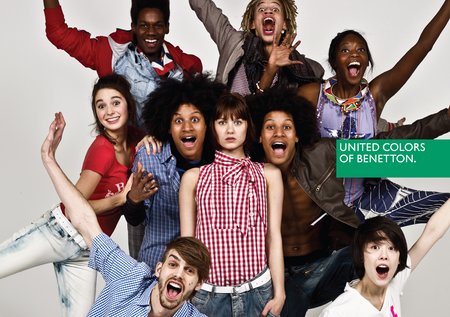
This is more or less what my family looks like!
I later moved into the heart of London where multiculturalism is the norm and even then the only brief encounter I had with colourism was a myth (or at least that's what I thought it was back then...) that black boys only wanted to date mixed race girls. I believed it was a myth because I had many black male friends who all dated black girls and my black girl friends never had an issue finding a date.

Fast forward 10 or so years, I now understood complexion jokes in movies, "The darker the berry, the sweeter the juice" now seemed like a segregational statement, 'School Daze' was no longer just a funny movie and I become overall more conscious. This is when I truly began to understand just how serious and real the problem of colourism is. Even at this point however, colourism didn't directly affect me and seeing hashtags like #TeamLightSkin and #TeamDarkskin on social networks was as stupid and meaningless to me as the cinnamon challenge.

Scene from 'School Daze': War between light & dark skinned girls
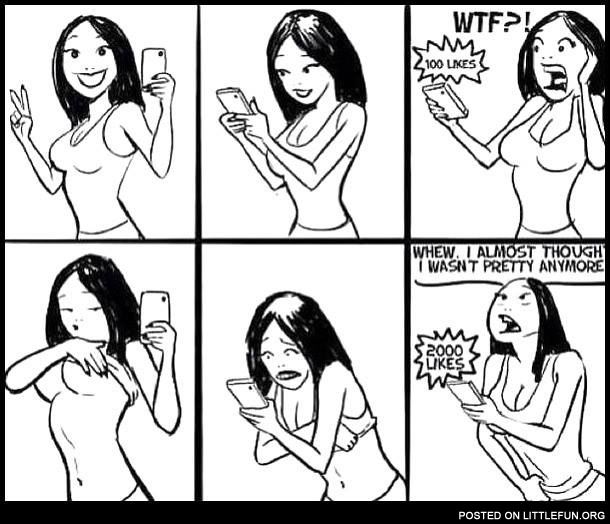
As I am currently at the age of settling down and starting a family, I have started thinking of issues that I could possibly face in the pursuit of creating a happy home. I've been thinking of parenting and the best way to raise a well rounded individual and issues that were previously of little importance to me are now up for review. It occurred to me that my child may be that 'silly' person that needs to tweet their every move to feel important or become obsessed with a celebrity or be that girl that believes a UK size 8 (US size 2) is fat; these are all things that I have never experienced or felt. How do you teach a child that self worth is not based on Instagram likes?
Imagine this was your daughter?! My biggest nightmare!
I have always found it ridiculous that people who looked black to the world would go out of their way to call themselves 'mixed' or tell you "My great-grandad was white/chinese/indian" but understanding the existance of colourism doesn't make it sound as silly to me as it previously did. Colourism, even in its Oxford Dictionaries definition, appears to only affect dark skinned girls but as I was watching 'Light Girls' after having previously watched 'Dark Girls' my heart broke at the idea that my little girl, whether her skin is light or dark, could one day face these struggles based solely on a genetic predetermination she had no control over. That my son could subconsciously have a negative outlook on black women even though he loved those in his bloodline. As if living with racism every day wasn't enough of a burden!


'Dark Girls' trailer (2011)

How am I to prepare my children against the same people they are supposed to be able to stand side by side with to fight for equality of races? How do you explain to a child that not only are other races going to look down on them but that there was classism based on skin tone within their own race? My mum is the colour of brown sugar and my dad the colour of chocolate, I see myself as a perfect blend of the two and have always been made to feel as such; how then can I relate to the feeling a person gets from being the 'wrong' shade of black? 


'Light Girls' trailer (2014)

Colourism dates back before the brown paper bag tests (Google it!) and it angers me that colonialism and slavery has left such deep wounds in not only the black race but in other races as well. Finding a cream or lotion in Bankok, Thailand without a lightening agent is like finding money on the street, it happens but very rarely. Lightening products are sold just as freely in supermarkets in Abuja, Nigeria. India is notorious for its skin tone segregation especially when casting for Bollywood movies. In Japan people literally paint their faces white to remove the pigmented appearance of their skin.

Bleaching cream billboard advertisement
I can't even imagine what hating the skin you're in feels like, it's a concept that is quite hard for me to grasp. Outside of the institutional racism that I face every day as a black woman, I have also experienced violent racism but never have I hated myself or my skin colour. Ironically, this could be BECAUSE I grew up around white people. The white people I encountered who were not racist were the first to comment on how beautiful my skin was so I grew up accepting that some caucasians would like me and some wouldn't, either way there was nothing wrong with me and unless they threatened my wellbeing,  how they felt about me was their problem and not mine. 

This is something I hope I can teach my children, how to love themselves irrespective of outside opinions and to allow others to live their lives as they choose instead of criticising or judging them based on their differences/choices.

"I have a dream that my four little children will one day live in a nation where they will not be judged by the color of their skin, but by the content of their character."
Martin Luther King Jr.


Related Posts Plugin for WordPress, Blogger...